
Горячая линия
1388xx888xx
Горячая линия
1388xx888xx
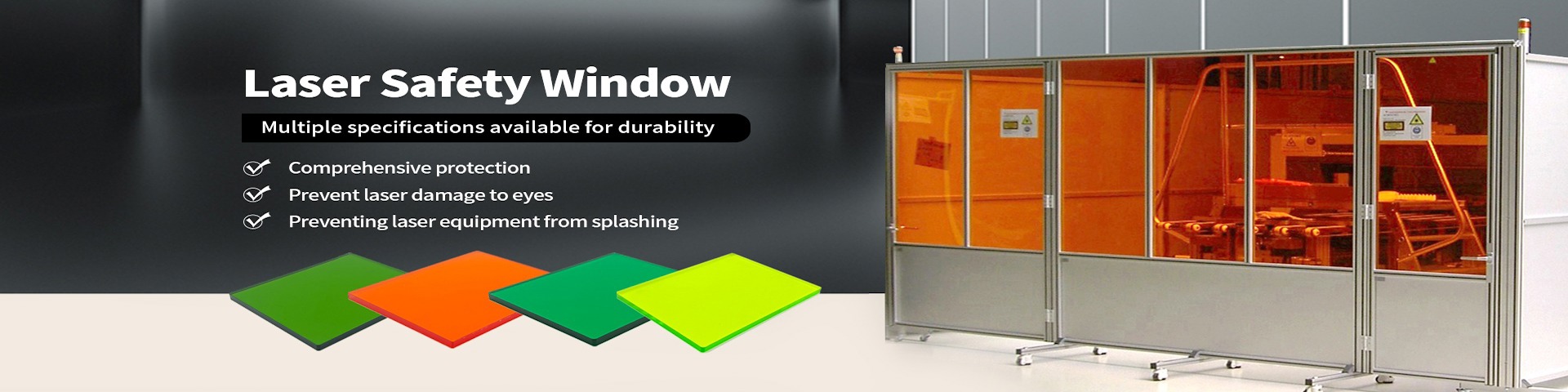

Введение лазерных систем в нашу повседневность стало одним из самых значительных технологических прорывов XX и XXI веков. С момента своего изобретения в 1960 году лазеры прошли долгий путь от лабораторных curiosities до неотъемлемых компонентов современных технологий. Они не только улучшили существующие процессы, но и создали совершенно новые отрасли и возможности. В этой статье мы углубимся в то, как лазерные системы изменили нашу жизнь, охватывая ключевые области, такие как медицина, связь, промышленность, развлечения и многое другое. Мы рассмотрим историю лазеров, их принципы работы, текущие применения и будущие тенденции, подчеркивая их взрывное влияние на общество.
Лазер, акроним для Light Amplification by Stimulated Emission of Radiation (усиление света вынужденным излучением), был впервые теоретически описан Альбертом Эйнштейном в 1917 году, но практическая реализация произошла лишь в 1960 году, когда Теодор Майман создал первый рабочий лазер на рубине. С тех пор лазерные технологии развивались экспоненциально, с изобретением различных типов лазеров, таких как газовые лазеры (например, гелий-неоновые), твердотельные лазеры (например, на иттрий-алюминиевом гранате с неодимом), полупроводниковые лазеры и волоконные лазеры. Основной принцип работы лазера заключается в том, что атомы или молекулы в активной среде возбуждаются внешним источником энергии, что приводит к излучению когерентного, монохроматического и направленного света. Эта уникальная комбинация свойств делает лазеры невероятно полезными в countless applications. Например, когерентность позволяет лазерному свету сохранять свою фазу на больших расстояниях, что критично для точных измерений и связи, в то время как монохроматичность обеспечивает чистый цвет, идеальный для спектроскопии и медицины. Направленность позволяет фокусировать лазерный луч в очень маленькую точку, достигая высокой интенсивности, которая может резать, сваривать или испарять материалы. Ранние применения лазеров включали военные цели, такие как целеуказатели и системы наведения, но быстро расширились на гражданские области. В 1960-х годах лазеры начали использоваться в хирургии, а в 1970-х — в телекоммуникациях с развитием волоконно-оптических систем. К 1980-м годам лазеры стали commonplace в потребительских устройствах, таких как CD-плееры и лазерные принтеры. Сегодня лазерные системы pervade почти every aspect of modern life, from healthcare and manufacturing to entertainment and environmental monitoring. Их эволюция продолжается с advances in miniaturization, efficiency, and new materials, promising even greater impacts in the future. Например, развитие квантовых каскадных лазеров открыло новые возможности в sensing and spectroscopy, while ultrafast lasers enable precise material processing at the femtosecond scale. История лазеров — это история innovation and adaptation, reflecting humanity's relentless pursuit of better tools and solutions. As we move forward, лазерные технологии will undoubtedly play a central role in addressing global challenges, such as climate change, energy efficiency, and healthcare access. В следующем разделе мы explore how лазеры have revolutionized medicine, saving lives and improving treatments in ways previously unimaginable.
Одной из самых profound impacts лазерных систем has been in the field of medicine. Лазеры have transformed surgical procedures, diagnostic techniques, and therapeutic treatments, making them less invasive, more precise, and often more effective. В хирургии, лазеры allow surgeons to perform operations with minimal bleeding and reduced trauma to surrounding tissues. For example, in ophthalmology, лазерная коррекция зрения, such as LASIK, has enabled millions of people to achieve perfect vision without glasses or contacts. The procedure uses an excimer laser to reshape the cornea, correcting refractive errors like myopia, hyperopia, and astigmatism. Similarly, in dermatology, лазеры are used for tattoo removal, scar treatment, and skin rejuvenation, leveraging their ability to target specific pigments or tissues without damaging the skin. Beyond surgery, лазеры play a crucial role in diagnostic imaging. Techniques like optical coherence tomography (OCT) use low-coherence interferometry with laser light to create high-resolution, cross-sectional images of biological tissues, aiding in the early detection of diseases such as glaucoma and macular degeneration. In cancer treatment, photodynamic therapy (PDT) involves using laser light to activate photosensitizing agents that destroy cancer cells, offering a targeted alternative to chemotherapy and radiation. Лазеры also facilitate minimally invasive procedures, such as laser angioplasty for clearing blocked arteries or laser lithotripsy for breaking up kidney stones. The advantages of laser-based medical applications include reduced pain, shorter recovery times, and lower risk of infection. Moreover, advancements in laser technology have led to the development of portable and affordable devices, bringing advanced healthcare to remote and underserved areas. For instance, handheld laser devices are now used for point-of-care diagnostics and treatments in field settings. The integration of lasers with robotics and AI is further enhancing precision and outcomes in surgery. As research continues, we can expect lasers to enable new frontiers in medicine, such as optogenetics for controlling neural activity or laser-assisted drug delivery. Overall, the medical revolution driven by lasers has not only improved patient outcomes but also redefined what is possible in healthcare, making it a cornerstone of modern medicine. In the next section, we turn to how lasers have revolutionized communication, enabling the high-speed, global connectivity we rely on today.
Лазерные системы are the backbone of modern communication, powering the optical fibers that carry vast amounts of data across the globe. The invention of the laser diode and the development of low-loss optical fibers in the 1970s paved the way for the telecommunications revolution. Unlike electrical signals in copper wires, light signals in optical fibers can travel long distances with minimal attenuation and interference, allowing for higher bandwidth and faster data transmission. Lasers are used to generate these light signals, which are modulated to encode information. The advent of wavelength-division multiplexing (WDM) further increased capacity by allowing multiple laser signals of different wavelengths to travel simultaneously through a single fiber, effectively multiplying the data rate. This technology underpins the internet, enabling everything from streaming video and online gaming to cloud computing and IoT devices. For example, a single optical fiber can carry terabits of data per second, supporting the explosive growth of digital content and services. Lasers also play a role in wireless communication, such as in free-space optical communication (FSO), where laser beams transmit data through the air for short-range links or satellite communications. The reliability and efficiency of laser-based systems have made them essential for critical infrastructure, including financial networks, emergency services, and government communications. Moreover, advancements in semiconductor lasers have led to smaller, cheaper, and more energy-efficient components, facilitating the deployment of fiber-to-the-home (FTTH) networks that provide gigabit internet speeds to consumers. The impact on society is immense: lasers have democratized access to information, connected people across continents, and driven economic growth by enabling new industries and business models. As we move towards 5G and beyond, lasers will continue to evolve, with developments in quantum communication using entangled photons for secure data transmission. In summary, lasers have not only changed how we communicate but have also reshaped the global economy and culture, making the world more interconnected than ever before. Next, we explore how lasers have revolutionized manufacturing and industry, boosting productivity and innovation.
В промышленности лазерные системы have become indispensable tools for cutting, welding, marking, and additive manufacturing, offering unparalleled precision, speed, and flexibility. Laser cutting, for instance, uses a high-power laser beam to melt, burn, or vaporize materials such as metal, plastic, or wood, creating intricate shapes with clean edges and minimal waste. This is widely used in automotive, aerospace, and electronics industries for producing components with high accuracy. Similarly, laser welding provides strong, precise joints without the need for additional materials, reducing weight and improving durability in products like cars and aircraft. Laser marking and engraving allow for permanent labeling on various surfaces, essential for traceability and branding in consumer goods. Perhaps the most transformative application is in additive manufacturing, or 3D printing, where lasers are used in techniques like selective laser sintering (SLS) and stereolithography (SLA) to build objects layer by layer from digital models. This enables rapid prototyping, custom manufacturing, and the creation of complex geometries that are impossible with traditional methods. The advantages include reduced material waste, shorter lead times, and the ability to produce on-demand, which is revolutionizing supply chains and design processes. Lasers also enhance quality control through non-destructive testing methods like laser ultrasonics or shearography, which detect defects in materials without damaging them. In the energy sector, lasers are used for drilling and processing in oil and gas exploration, as well as in the manufacturing of solar panels and batteries. The automation of laser systems with robotics and AI further increases efficiency and consistency in production lines. Overall, lasers have boosted industrial productivity, reduced costs, and fostered innovation across sectors. As technology advances, we can expect even greater integration, such as in smart factories where lasers work alongside IoT devices for real-time optimization. This industrial revolution driven by lasers underscores their role as a key enabler of modern manufacturing. In the next section, we discuss how lasers have transformed entertainment and daily life, from displays to consumer electronics.
Лазерные системы have seamlessly integrated into our daily lives, enhancing entertainment, convenience, and safety. In entertainment, lasers are used in light shows, concerts, and projectors to create stunning visual effects. Laser projectors, for example, offer brighter, more vibrant images with longer lifespans compared to traditional lamp-based projectors, making them ideal for home theaters and large venues. In consumer electronics, lasers are ubiquitous: they read and write data in Blu-ray players and optical drives, scan barcodes at checkout counters, and enable accurate distance measurement in devices like laser tape measures and rangefinders. Laser printers provide high-quality printing for homes and offices, while laser mice offer precise tracking for computing. In automotive applications, lasers are used in LiDAR (Light Detection and Ranging) systems for autonomous vehicles, helping them navigate and avoid obstacles by creating detailed 3D maps of the environment. This technology is also employed in advanced driver-assistance systems (ADAS) for improved safety. Additionally, lasers have found their way into hobbies and sports, such as in laser tag games or golf rangefinders. The miniaturization of lasers has led to their incorporation into smartphones for facial recognition and augmented reality features. In home security, laser-based motion detectors and alarms provide reliable protection. The aesthetic appeal of lasers is evident in decorative lighting and art installations, where they create dynamic patterns and colors. Moreover, lasers contribute to energy efficiency; for instance, laser-etched surfaces can reduce friction and wear in appliances, extending their lifespan. The pervasiveness of lasers in daily life often goes unnoticed, but their impact is profound, making tasks easier, safer, and more enjoyable. As technology continues to evolve, we can expect even more innovative applications, such as laser-based cooking or personalized health monitors. This seamless integration highlights how lasers have moved from specialized tools to everyday essentials. Next, we look at the scientific and research applications of lasers, pushing the boundaries of knowledge.
В научных исследованиях лазерные системы have been instrumental in advancing our understanding of the universe, from the microscopic world of atoms to the vastness of space. Lasers provide unique capabilities for precise measurement, manipulation, and analysis. In physics, lasers are used in experiments like the LIGO (Laser Interferometer Gravitational-Wave Observatory), where they detect gravitational waves by measuring tiny changes in distance, confirming Einstein's theory of general relativity and opening a new window on the cosmos. In chemistry, lasers enable spectroscopy techniques that identify molecules based on their light absorption or emission, aiding in drug discovery and environmental monitoring. Ultrafast lasers, with pulses lasting femtoseconds, allow scientists to observe chemical reactions in real-time, capturing events that occur too quickly for conventional methods. In biology, lasers are used in flow cytometry to sort and analyze cells, and in microscopy techniques like confocal laser scanning microscopy, which provides high-resolution 3D images of biological samples. Lasers also facilitate optical tweezers, where focused laser beams can trap and manipulate tiny particles, such as viruses or DNA, enabling studies on molecular mechanics. In astronomy, lasers are used for adaptive optics, where they create artificial guide stars to correct for atmospheric distortion in telescopes, resulting in sharper images of stars and galaxies. Furthermore, lasers play a role in nuclear fusion research, such as in inertial confinement fusion experiments where they compress fuel pellets to achieve fusion conditions. The versatility and precision of lasers make them invaluable across disciplines, driving innovations that often translate into practical applications. For example, laser-based sensors are used in climate science to measure greenhouse gases or in archaeology to date artifacts using luminescence. As laser technology advances, with developments in quantum optics and attosecond lasers, we can expect even more groundbreaking discoveries. This relentless pursuit of knowledge underscores the transformative power of lasers in science. In the final section, we discuss the future prospects and ethical considerations of laser technologies.
Будущее лазерных систем promises even greater innovations, but also raises important ethical and societal questions. On the technological front, we can expect advances in areas like quantum computing, where lasers are used to manipulate qubits for faster processing, or in biophotonics, where lasers enable non-invasive medical treatments and diagnostics. The development of more powerful and efficient lasers, such as those based on new materials like perovskites or graphene, could lead to applications in energy harvesting, space exploration, and beyond. For instance, laser propulsion systems might one day power spacecraft, reducing travel time to other planets. In everyday life, the integration of lasers with AI and IoT could create smart environments that respond to our needs in real-time, from personalized lighting to automated healthcare. However, these advancements come with challenges. Ethical considerations include the potential misuse of lasers, such as in weaponry or privacy invasions through laser surveillance. There are also concerns about safety, as high-power lasers can cause eye damage or other hazards if not properly regulated. Additionally, the environmental impact of manufacturing and disposing of laser devices must be addressed, promoting sustainability through recycling and energy-efficient designs. Societally, the widespread adoption of lasers could exacerbate inequalities if access to advanced technologies is limited to wealthy regions. Therefore, it is crucial to foster inclusive innovation and establish robust regulations to ensure that laser technologies benefit all of humanity. Education and public awareness will play key roles in navigating these issues. Despite these challenges, the potential for positive impact is enormous. Lasers have already changed our lives forever, and their continued evolution will likely bring solutions to some of the world's most pressing problems, from disease eradication to climate change mitigation. In conclusion, лазерные системы are not just tools; they are catalysts for progress, embodying human ingenuity and the endless pursuit of improvement. As we look ahead, embracing both the opportunities and responsibilities will ensure that lasers continue to enhance our world in meaningful ways.
Заключение: Лазерные системы indeed have changed our lives forever, revolutionizing medicine, communication, industry, entertainment, and science. Their journey from laboratory novelty to everyday essential demonstrates the power of innovation. As we continue to explore and harness their potential, lasers will undoubtedly shape a brighter, more connected, and advanced future for all.

Телефон:1388xx888xx
Мобильные телефоны:1388xx888xx
Адрес:Room 401, Greenland Lanhai Building, Jinye Road, High-Tech Zone, Xi'an, Shaanxi, China
Почтовый ящик:1388xx888xx@gmail.com