
Горячая линия
1388xx888xx
Горячая линия
1388xx888xx
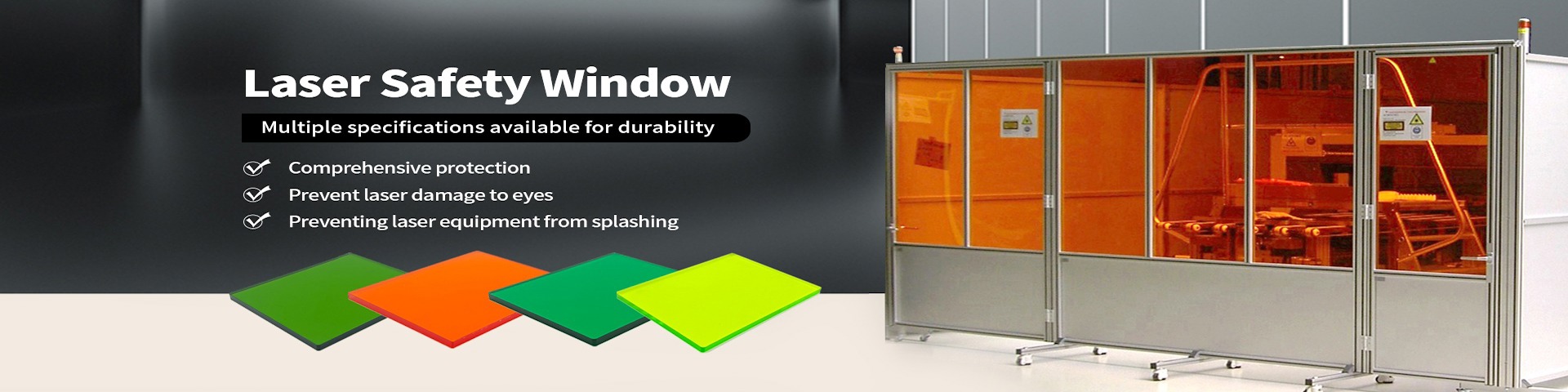
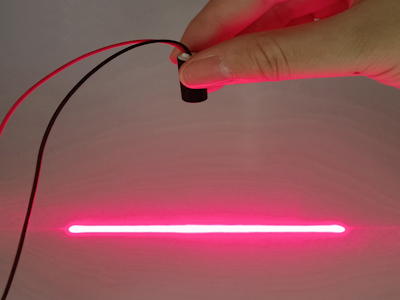
В современном мире технологии стремительно развиваются, и лазерные инновации находятся в авангарде этого прогресса. От медицины до промышленности, лазеры революционизируют то, как мы живем и работаем. В этой статье мы подробно рассмотрим, как лазерные технологии формируют наше будущее уже сегодня, предлагая инсайты из различных отраслей и демонстрируя практические примеры их применения.
Лазеры, или оптические квантовые генераторы, были изобретены в 1960 году и с тех пор прошли долгий путь. Изначально используемые в научных экспериментах, они теперь проникли во множество сфер жизни. Основной принцип работы лазера основан на вынужденном излучении, что позволяет создавать когерентные и монохроматические световые пучки высокой интенсивности. Это свойство делает лазеры незаменимыми в точных applications, где требуется контроль над энергией и направлением.
За последние десятилетия лазерные технологии значительно эволюционировали. Ранние лазеры были громоздкими и дорогими, но сегодня мы видим миниатюризацию и снижение costs, что открывает doors для массового adoption. Например, волоконные лазеры и полупроводниковые лазеры стали более efficient и accessible, driving innovation across industries.
Ключевым аспектом лазерных инноваций является их способность к адаптации. Whether it's in manufacturing, healthcare, or communications, lasers offer precision and efficiency that traditional methods cannot match. This adaptability is what makes them a cornerstone of future technological advancements.
В промышленном секторе лазеры играют crucial role в manufacturing processes. Лазерная резка, сварка и маркировка стали standard в automotive, aerospace, and electronics industries. Эти технологии позволяют achieve high precision with minimal material waste, reducing costs and environmental impact.
Например, в automotive industry, лазеры используются для резки сложных деталей из металла и plastics с accuracy до микрометров. This not only speeds up production but also enhances safety by reducing human error. Additive manufacturing, or 3D printing, также benefits from laser sintering, where lasers fuse materials layer by layer to create complex structures.
Кроме того, лазерные sensors и системы контроля качества обеспечивают real-time monitoring of production lines, detecting defects early and ensuring consistency. This leads to higher product quality and customer satisfaction. As industries move towards Industry 4.0, lasers are integral to smart factories, where automation and data exchange are key.
В energy sector, лазеры используются для cleaning solar panels and inspecting wind turbines, maintaining efficiency in renewable energy sources. This demonstrates how laser innovations are not just about creation but also maintenance and sustainability.
В медицине лазеры revolutionized diagnostics and treatment. Laser surgery, for instance, offers minimally invasive procedures with reduced recovery times. Procedures like LASIK eye surgery or laser ablation for tumors are now common, providing patients with safer alternatives to traditional surgery.
Лазерная терапия также используется в dermatology for skin resurfacing, tattoo removal, and hair removal, leveraging the precision of lasers to target specific tissues without damaging surrounding areas. In diagnostics, techniques like optical coherence tomography (OCT) use lasers to create high-resolution images of tissues, aiding in early detection of diseases such as cancer.
Более того, лазеры играют role in dental care, for procedures like cavity detection and gum treatment. The ability to focus energy precisely makes lasers ideal for medical applications where accuracy is paramount. Recent advancements include photodynamic therapy, where lasers activate drugs to destroy cancer cells, showcasing the interdisciplinary nature of laser innovations.
The future of medical lasers looks promising with developments in nanosecond lasers for ultra-precise surgeries and integration with AI for personalized treatment plans. This convergence of technologies could lead to breakthroughs in regenerative medicine and beyond.
В области связи лазеры являются backbone of modern fiber-optic networks. These networks transmit data as light pulses through glass fibers, enabling high-speed internet and telecommunications. Without lasers, the global connectivity we enjoy today would not be possible.
Лазерные диоды и amplifiers ensure that signals can travel long distances with minimal loss, supporting everything from streaming video to cloud computing. As demand for bandwidth increases, innovations like wavelength-division multiplexing (WDM) allow multiple data streams to be transmitted simultaneously over a single fiber, drastically increasing capacity.
В computing, lasers are used in optical data storage and processing. Quantum computing research often involves lasers for manipulating qubits, pointing towards a future where lasers enable unprecedented computational power. Additionally, lidar technology, which uses lasers for ranging, is crucial for autonomous vehicles and mapping, enhancing safety and efficiency in transportation.
The integration of lasers with 5G and upcoming 6G technologies will further revolutionize how we communicate, making real-time applications like virtual reality and telemedicine more accessible. This highlights how laser innovations are continuously pushing the boundaries of what's possible in IT.
В научной сфере лазеры являются indispensable tools for research. In physics, they are used in experiments like the Large Hadron Collider to study fundamental particles, or in spectroscopy to analyze materials at atomic levels. Lasers enable scientists to probe matter with extreme precision, leading to discoveries in fields from chemistry to astronomy.
For example, in astronomy, adaptive optics systems use lasers to create artificial guide stars, correcting for atmospheric distortion and allowing telescopes to capture clearer images of distant objects. In biology, laser tweezers can manipulate individual cells or molecules, facilitating studies in genetics and cellular processes.
Лазерные innovations также driving advancements in materials science, where lasers are used for surface modification and nanoparticle synthesis. These applications have implications for developing new materials with enhanced properties, such as stronger alloys or smarter textiles.
The collaborative nature of laser research often involves international projects, fostering global innovation. As we look to the future, lasers will likely play a key role in exploring space, with proposals for laser propulsion systems or communication with distant probes.
В energy sector, лазеры contribute to sustainable development through various applications. Laser-based sensing and monitoring help optimize energy production in nuclear fusion research, where lasers are used to initiate and control fusion reactions, potentially providing a clean and limitless energy source.
In renewable energy, lasers assist in manufacturing efficient solar cells and wind turbines by enabling precise cutting and welding. They are also used in environmental monitoring, such as detecting pollutants or measuring atmospheric conditions with LIDAR systems.
Лазерная абляция can be employed for waste management, breaking down hazardous materials safely. Moreover, in agriculture, lasers are used for precision farming, targeting pests or optimizing irrigation, which reduces resource consumption and promotes sustainability.
As the world shifts towards a green economy, laser innovations will be crucial in developing technologies that minimize environmental impact. For instance, lasers could enable more efficient energy storage systems or carbon capture methods, aligning with global goals for climate action.
Looking ahead, the future of laser technology is bright and full of potential. Emerging trends include the development of ultrafast lasers for even greater precision, integration with artificial intelligence for autonomous systems, and expansion into new fields like quantum technologies.
Ультрабыстрые лазеры, capable of pulses in femtoseconds, are opening doors to applications in micromachining and medical procedures that were previously impossible. AI algorithms can optimize laser parameters in real-time, enhancing efficiency and outcomes in various applications.
В quantum realm, lasers are essential for quantum cryptography and computing, promising secure communication and powerful problem-solving capabilities. As these technologies mature, they will likely become more affordable and widespread, democratizing access to laser-based solutions.
В conclusion, лазерные инновации уже сегодня меняют будущее, offering transformative benefits across industries. From improving manufacturing efficiency to saving lives in medicine, and from enabling global communication to driving scientific discovery, lasers are at the heart of modern progress. Embracing these innovations will be key to addressing global challenges and shaping a better tomorrow.
We encourage businesses and individuals to explore how laser technologies can be integrated into their operations. Whether through adopting new equipment or partnering with research institutions, the opportunities are vast. The future is laser-powered, and it's happening now.
Эта статья предоставила comprehensive overview of laser innovations, but the journey doesn't end here. Stay tuned for more updates as technology continues to evolve. If you're interested in implementing laser solutions, contact experts in the field to learn how you can be part of this exciting future.

Телефон:1388xx888xx
Мобильные телефоны:1388xx888xx
Адрес:Room 401, Greenland Lanhai Building, Jinye Road, High-Tech Zone, Xi'an, Shaanxi, China
Почтовый ящик:1388xx888xx@gmail.com